HOMOLOGOUS TRAIT
Homology is a reference to two things that have an equivalent role or some sort of relationship. Two species have related parts that may do the similar things but are not really the same. Homology is very important when it comes to comparative biology because it helps identify if any species have a common ancestor. Two examples of species that possess a homologous trait would be a human being and a Golden Retriever. These two species come from two very different environments in which they have adjusted to it accordingly. Humans are mammals with a diet being classified as omnivores because of both the meat and vegetable intake. However, according to recent studies, scientists have classified humans as being more carnivores than omnivores due to the meat intake yearly. A Golden Retriever was officially recognized in 1925 by the American Kennel Club and it is a large-sized breed of dog bred. Their diet is basically under omnivore because they eat both meat and vegetables. Their environment of course is basically anywhere around the world except the oceans. Both of these two species have been classified as vertebrae.


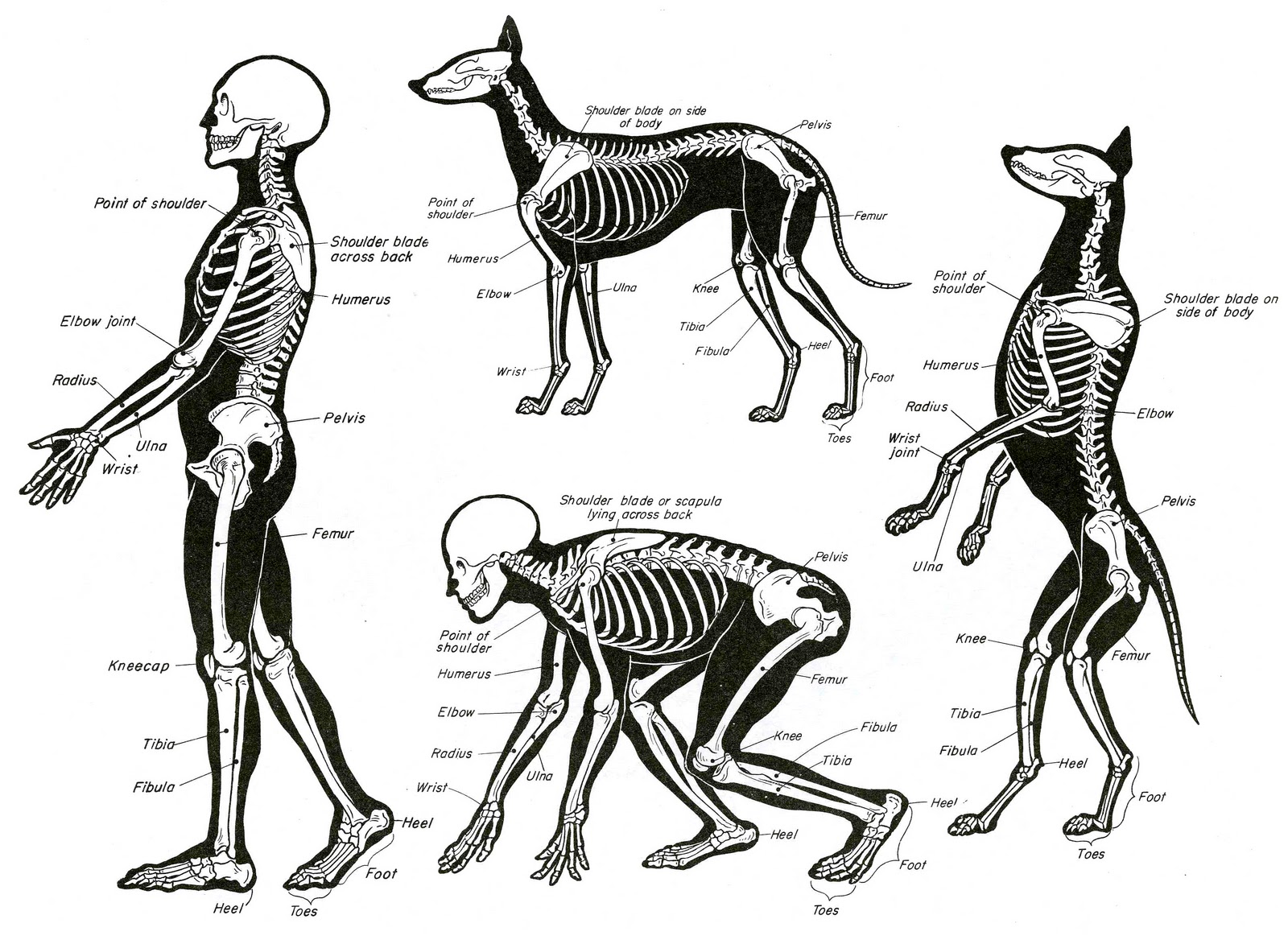


There
are quite a few examples as to how humans and dogs both carry a homologus trait
and one of them would be the tailbone of a human and the tail of a dog (Golden
Retriever). The tailbone of the human or the coccyx has become a vestigial
structure, dogs have their tails intact. The coccyx serves as a sort of
attachment to tendons, ligaments, and muscles. It also works as an insertion
point to some of the muscles in relation to the pelvic floor. On the other hand
the canine tail consists of about six to at least 23 mobile vertebrae. Muscles line
the tail vertebrae by tendons. The usage of the tail is for a dog to
communicate. That’s how they express if they are happy, full of aggression,
stressed and many other emotions. It also serves as a balance when dogs are
carrying out complicated tasks. We don’t have a visible tail like the dogs do
but the structure of the coccyx and the bones supporting it are similar to the
tailbones to the dogs.

Protungulatum Donnae
Humans
and dogs have shared a common ancestor over 100 million years ago. The ancestor
they both share is speculated by researchers to be an insectivore. It was a
small, adorable, long-tailed insect eater called Protungulatum Donnae. This was
the one to begin the sprang of every “placental mammal.” This common ancestor
through evidence showed that it may have lived in North America, but there are
still possibilities that animal may have existed in other continents as well. Some
of the characteristics are full-term live births, the Protungulatum was found
with two horn uterus and a placenta in which the blood came in close contact
the membranes that surrounded the fetus just like it is in humans or any other
mammal.
ANALOGOUS TRAIT
An analogous trait or structure is when two different species have similar traits but they are not related to each other. The species may live in similar environments and both fill in similar ecological roles. A great example of analogous trait possessors would be the Great White Shark and the Bottle-nose Dolphin. The Great White Shark is the largest predator fish in the world. They can be anywhere from fifteen to twenty feet and weigh about 5,000 lbs. They are found in cool, coastal waters throughout the world. Their bodies are slate-gray on the upper bodies in order to blend in with the rocky coastal sea floor, but because of their white bellies is how they got their name. The shark’s skeleton is composed of cartilage. Their diet is classified as carnivores. On the other hand Bottle-nose Dolphins are known as a very charismatic, intelligent and because of their curved mouths it makes them the friendliest smiling creatures. They are classified as mammals with a carnivorous diet. They are about ten to fourteen feet in size and weigh about 1,100 lbs. live about 50 years. Their skeleton is made up of bone unlike the sharks. Usually are found in tropical oceans and other warms water around the world. Another unique difference between the two would be that dolphins go up the surface to breathe air while sharks use their gills to extract oxygen from the water.


Although both of these species are in similar in appearance such as their color, how their fins are placed, and body shape and behave similarity and even to their diets, sharks are fishes while dolphins are mammals as previously mentioned. The difference between the shark’s fin and dolphin’s fin is that the dolphin’s dorsal fin is curved backward toward the animal’s rear. It has an arc that is definite to its shape and has quite a sharp curved tip. A shark’s dorsal fin stands straight up and it is broad right at the animal’s back. The front edge of the fin is angled backward while the back edge is straight. These are some of the differences in their structure but their similarity is that they both have fins that help them navigate through the aquatic environments. The shaping of their fins were formed according to the feature environment they inhabited instead of inheriting it from a common ancestor. That is the shark uses his broad straight up fin to navigate in the depths of the cool, coastal waters. While the dolphin uses his curved backward fin in order to navigate in tropical, warm aquatic environments.
The reason why the traits are relevant as analogous is because the dolphin derived from a common mammal ancestor while the shark derived from a common fish ancestor. Two different species that have similar qualities and behavior due to adjusting to the environment they were living in. it is said that Dolphins evolved from a land mammal that had even number of toes and also known as an artiodactyla. The great white shark evolved from Megalodon 50 feet long shark that also evolved from Cretolamna appendiculata which lived about 60 to 100 million years ago. This all happened due to convergent evolution is when two different species evolve functionally features known as “analogous structures.” Both these species have evolved analogous traits instead having it from a common ancestor. Their streamlines bodies, dorsal fins, flippers and pectoral fins are there for the same goal which is to swim quickly through the ocean and catch a prey to eat off of.

Hi Stephanie,
ReplyDeleteSuch a great post! I really like the pictures you implemented throughout this post, which illustrated successfully the homologous and analogous traits. I, too, found the insect eater as a common ancestor for the homologous trait of the arms and limbs, which to me I would have never thought that was the common ancestor of these species. Also, I truly love how you organized the information, which I thought was more concise and clear and the pictures rights after the paragraphs helped me visualize the information. I thought you chose two great traits; I really loved the one with the dogs and humans because I had always wondered how similar in a sense we are to dogs. All in all, great post and great explanation on how the sharks and dolphins features were related with slight differences making them evolutionary different in a way.
Very good and very thorough description of your homologous species, and well done with your explanation of their shared their homologous trait, clearly describing the different environments and functions that produced the divergent evolution that led to the differences between the two traits.
ReplyDeleteWith regard to ancestry, that is indeed a possible common ancestor, but the important point here is that both humans and dogs are mammals and therefore share a common mammalian ancestor who possessed that primitive mammalian tail structure, passing it onto these two extant species. It is that information, emphasizing the trait possessed by that ancestor, that is important for confirming that these traits are indeed homologous.
Good description of your two analogous species. For your discussion on the analogous traits themselves, remember that for this section, what is important is identifying the similarities in those traits and explain how the environment and/or function of those traits are what caused those similarities to arise via convergent evolution. Not differences... similarities.
You do a better job in the last paragraph of emphasizing these similarities when discussing the ancestry issue. Good explanation of ancestry there, but I do want to point out a complication with this pairing that can make it appear that they are homologous, which requires further explanation to clarify the analogous relationship.
The common ancestor of the dolphin and shark is an archaic fish, who did possess these fin structures and also passed that trait onto extant fish species, including the shark. So the question is, did the dolphin also inherit it's fin from that common ancestor? Dolphins "fins" evolved after dolphins split off from terrestrial mammals, i.e., long after the split with ancient fish. This provides us with the evidence we need to confirm that this trait did evolve independently in at least one of these organisms, making these traits analogous.
Good images, and other than a couple of points, well done.
Lots of good information, so good job over all. I chose almost the same topics, like instead of tail bones in dogs vs humans, I did humans vs monkeys. I did not go as into detail as you did, but I also did sharks vs dolphins. Again, lots of great info, and really good photos.
ReplyDeleteStephanie,
ReplyDeleteI enjoyed reading your post and thought you had really good examples discussing the homologous and analogous traits. I too used similar organisms being compared however had completely different traits that I discussed among the two. You you did a good job in comparing the two traits and relating them to each other while discussing the functions of their traits. The pictures provided helped to even better understand and clearly determine your argument presented.
With regard to the last paragraph of your homologous section, I too found the specific common ancestors of the placental mammal to be the protungulatum donnae. I found this to be very interesting, considering the thought that we all derived from this tiny, furry, long-tailed, funny looking creature.
Hi Stephanie!
ReplyDeleteYour visuals to the assignment were very well. I thought you also explained the homology as well as analogy well. It kept me pretty intrigued because it was so well organized and structured well. It honestly helped me understand a little bit more about this section for the class. Great job on the assignment!
Great post. I actually had no lie that we could be so closely related to dogs in that way, and that it was only a mere 100 million years ago that we split off and evolved into different directions. You did a brilliant job of your choice of photos. It was the key In me understanding. I was going to compare Shark's and dolphins but what having a hard time with it. This makes it look like a very simple concept. Great work and thanks for the help!
ReplyDelete